Sleeping soundly: Helping kids and teens develop good sleep habits for life
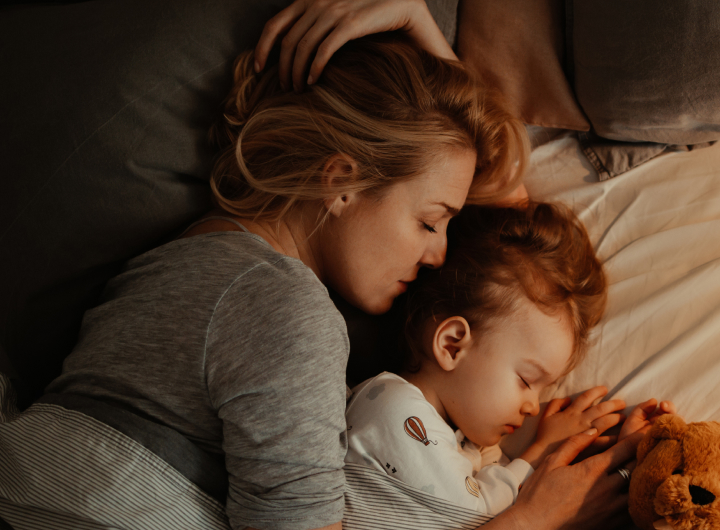
Imagine your child or teenager happily going to bed each night and waking up refreshed the next morning. During the day they’re alert and energized. Learning and problem solving happen more easily, they get along well with others, and most of the time they feel good physically and mentally.
Getting enough sleep is important for kids and teens for lots of reasons. Along with eating well and getting plenty of exercise, it’s one of the fundamental building blocks to good health and well-being. But in today’s busy world, children and teens seem to be struggling with sleep more than ever.
In a worrying sign of the times, sleep problems now affect almost half of children aged 5 to 171. Teenagers are getting less sleep than in previous decades, with only 37% of younger teens and 22% of older teens sleeping more than seven hours a night2. Children with autism or ADHD have also been found to have higher rates of sleep problems than children without autism or ADHD, with better sleep helping reduce the severity of symptoms3,4.
If your child or teen is experiencing sleep problems, you’re not alone. Maybe they resist going to bed, have trouble falling asleep or wake frequently through the night. Or perhaps your child experiences bedtime fears or nightmares. Maybe your teen is experiencing a chronic lack of sleep that is impacting their schoolwork, social life and mood. Add screens to the mix, and getting a good night’s sleep for children and teens can be extra challenging.
The good news is, bedtime routines and healthy habits can help overcome sleep problems5 and give your child or teen the skills they need to sleep well now and in the future.
The importance of getting enough sleep
Getting enough sleep helps children and teenagers in every area of life. Getting up and dressed in the morning, being engaged in activities or schoolwork, relationships and homelife all become easier when kids and teens are well rested.
When children and teens are sleep deprived, it can make it harder for them to concentrate and manage their emotions and behaviour. Insufficient sleep can increase the risk of physical and mental health issues including accidents, obesity, depression, and in the worst cases, self-harm or suicidal thoughts/attempts6.
While this can sound scary, helping your child or teen get enough sleep is achievable. It all starts with knowing how much sleep they need for their age. As children grow and develop, they require different amounts of sleep. While every child is different and some will need more sleep than others, the American Academy of Sleep Medicine recommends the following amount of sleep per day for each age group6:
- Children aged 1 to 2 years – 11 to 14 hours of sleep (including naps)
- Children aged 3 to 5 years – 10 to 13 hours of sleep (including naps)
- Children aged 6 to 12 years – 9 to 12 hours of sleep
- Teenagers aged 13 to 18 years – 8 to 10 hours of sleep
How to help your child or teen get a good night’s sleep
Bedtime routines and rituals can make a big difference when it comes to helping toddlers and young children, or older children and teens, get a good night’s sleep. Not only can they prevent many sleep problems from occurring, but they can help overcome them too.
Bedtime routines for toddlers and young children
- Set regular naptimes during the day and a regular bedtime, such as 7.30pm, or whatever works best for your family. Make sure they can get the recommended amount of sleep for their age group and wake up around the same time each morning.
- Turn the TV and all screens off at least one hour before bed. Contrary to popular belief, watching TV or screens right before bedtime doesn’t help kids wind down. Instead, exposure to screens before bed can disrupt their natural sleep rhythms and make it difficult for them to fall asleep. Quiet activities such as reading, puzzles, drawing or colouring are better alternatives.
- Create a bedtime routine and stick to it as much as possible. This might include going to the toilet, brushing their teeth, saying goodnight to other family members, reading stories together, tucking them into bed, singing a lullaby, giving them a kiss and cuddle, telling them how much you love them and turning out the light. Find a routine that works for your family!
Sleep troubleshooting guide for toddlers and young children
- For young children who have trouble falling asleep on their own, it can help to have a parent or caregiver stay in their room until they fall asleep. It can also help to tell your child you will check on them while they’re falling asleep, gradually increasing the amount of time between check-ins.
- For young children who frequently get out of bed, the most important thing to do is stay calm, then guide them back to bed and gently tell them it’s time to go to sleep. You may need to do this several times before your child eventually drifts off.
- It’s okay to use a night light if your child is afraid of the dark. If they experience nightmares or night terrors, help them feel safe, offer your support and sympathy, and rest assured it’s typically a phase that will pass.
- Many parents and caregivers choose to co-sleep with their child. However, if you would prefer your child to sleep in their own bed and often find them climbing into yours, you might like to try one of the strategies above.
Bedtime rituals for older children and teenagers
- Go to bed and wake up around the same time each night and day, including weekends. Make sure they can get the recommended amount of sleep for their age group.
- Turn the TV and all screens off at least one hour before bed.
- Create a relaxing bedtime routine and stick to it as much as possible. This might include having a warm shower, brushing teeth, saying goodnight to other family members, reading a book, listening to soothing music, doing some meditation, talking about the day/school/weekend together, giving them a hug and kiss and telling them how much you love them. As your child or teen gets older, some of these steps might naturally change or fall away.
Sleep troubleshooting guide for children and teenagers
- As tempting as it can be on the weekends, excessive sleep-ins can disrupt your child or teen’s natural sleep patterns, so try to help them avoid these as much as possible.
- Taking long naps during the day or later in the evening can also disturb sleep rhythms. Limiting naps to no more than 20 minutes in the afternoons7 can help.
- Exposure to screens before bedtime impacts older children and teens in the same way as younger children (and adults), disrupting their internal body clock. Having a TV or screens in the bedroom has also been linked to shorter and poorer sleep8, so it’s best to keep/use these in other rooms.
- Exposure to sunlight, especially first thing in the morning, plays a big part in quality sleep. Having breakfast outside or on the balcony (weather permitting), going for a morning walk or spending time outdoors are all beneficial.
- Caffeine can keep your child or teen awake at night, so help them avoid it in the afternoon and evening.
- Not getting enough exercise can negatively impact your child or teen’s sleep, so encourage them to get the recommended 60 minutes each day, and not too close to bedtime.
- Worry and stress can impact your child or teen’s sleep. Checking in with them regularly, listening to them without judgement and helping them with problem solving can make a big difference. If your child is still struggling, be sure to speak to a health professional. Help is always available.
Life doesn’t always run on schedule and it’s perfectly okay if holidays or special occasions such as weddings, parties or big sporting events disrupt bedtime routines from time to time. The important thing is, by creating healthy sleep habits and sticking with them as much as possible, you’ll be helping your child or teen enjoy the benefits of sleeping well for years to come.
Learn more about positive parenting through our online programs
Every parent can benefit from evidence-based strategies to support their child. For families of children aged 12 and under, Triple P Online can help. For support with teens, you could try Teen Triple P Online. For parents and caregivers of children with disability, you might be interested in Stepping Stones Triple P Online. For parents and caregivers of children experiencing anxiety, consider Fear-Less Triple P Online. For separating or divorcing parents, take a look at Family Transitions Triple P Online. And for strategies on how to create healthy screen time habits, check out our new program Triple P Online: Children and Screens.
Triple P – Backed by research, proven by parents.
References
- The Royal Children’s Hospital National Child Health Poll. (2025). Are kids sleeping soundly? Views of Australian parents Poll Number 35. The Royal Children’s Hospital Melbourne, Parkville, Victoria. https://rchpoll.org.au/wp-content/uploads/2025/02/NCHP35-Poll-report-A4_FA.pdf
- Widome, R., Kreski, N. T., Maslowsky, J., Patrick, M. E., & Keyes, K. M. (2026). Sleep duration among US adolescents, 1991–2023. Pediatrics, 157(6). https://doi.org/10.1542/peds.2025-074933
- Whelan, S., Mannion, A., Madden, A., Berger, F., Costello, R., Ghadiri, S., & Leader, G. (2022). Examining the relationship between sleep quality, social functioning, and behavior problems in children with autism spectrum disorder: A systematic review. Nature and Science of Sleep, 14, 675–695. https://doi.org/10.2147/NSS.S239622
- Yin, H., Yang, D., Yang, L., & Wu, G. (2022) Relationship between sleep disorders and attention-deficit-hyperactivity disorder in children. Frontiers in Pediatrics, 10. https://doi.org/10.3389/fped.2022.919572
- Selman, S. B., & Dilworth‐Bart, J. E. (2024). Routines and child development: A systematic review. Journal of Family Theory & Review, 16(2), 272-328. https://doi.org/10.1111/jftr.12549
- Paruthi, S., Brooks, L. J., D'Ambrosio, C., Hall, W. A., Kotagal, S., Lloyd, R. M., Malow, B. A., Maski, K., Nichols, C., Quan, S. F., Rosen, C. L., Troester, M. M., & Wise, M. S. (2016). Consensus statement of the American Academy of Sleep Medicine on the recommended amount of sleep for healthy children: Methodology and discussion. Journal of Clinical Sleep Medicine, 12(11), 1549–1561. https://doi.org/10.5664/jcsm.6288
- Lewin, D.S., Wolfson, A.R., Bixler, E.O., & Carskadon, M.A. (2016). Duration isn't everything. Healthy sleep in children and teens: duration, individual need and timing. Journal of Clinical Sleep Medicine, 12(11),1439–1441. https://doi.org/10.5664/jcsm.6260
- Falbe, J., Davison, K. K., Franckle, R. L., Ganter, C., Gortmaker, S. L., Smith, L., Land, T., & Taveras, E. M. (2015). Sleep duration, restfulness, and screens in the sleep environment. Pediatrics,135(2). https://doi.org/10.1542/peds.2014-2306